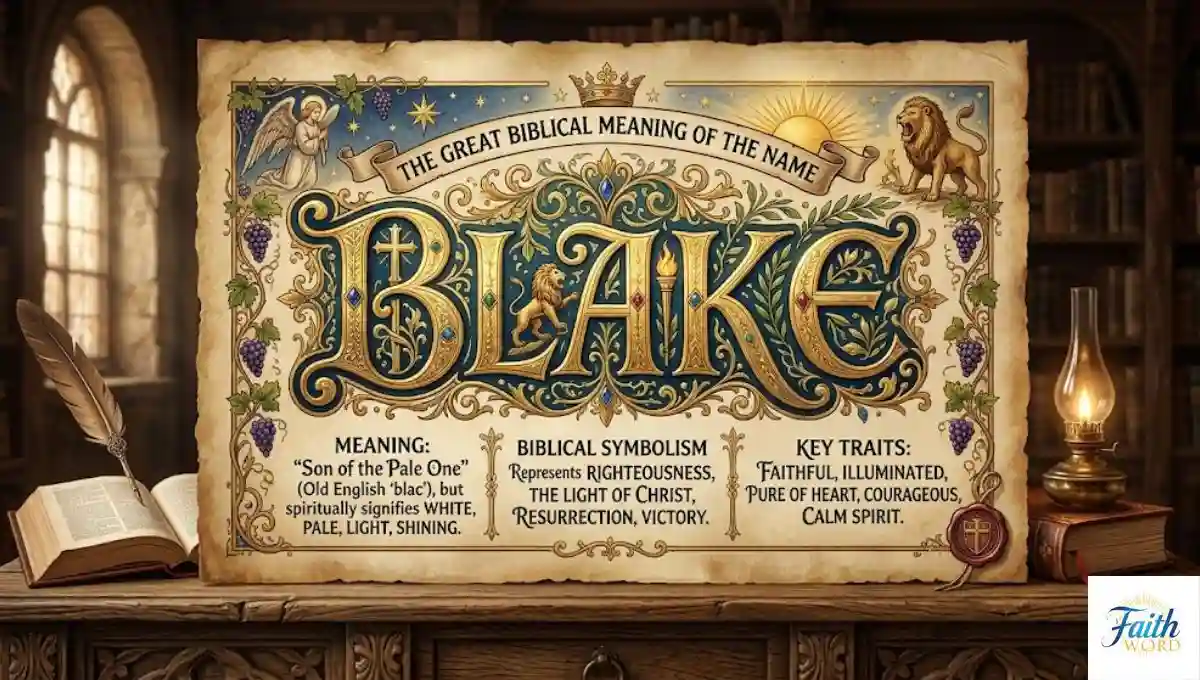
The Blake name meaning carries a profound spiritual depth that resonates with parents seeking Christian baby names Blake rooted in faith. While Blake is not directly mentioned in Scripture, its Biblical meaning of Blake and Blake spiritual meaning connect closely to themes of spiritual growth in Scripture, identity and purpose in God, and God’s redemptive work.
This name reflects a life of faith-centered life, strength and humility, and walking in God’s truth, offering both ordinary lives with extraordinary purpose and a path toward living with spiritual significance.
Choosing Blake aligns with intentional naming for faith, biblical principles in baby names, and names with historical and spiritual depth, making it a meaningful Christian name that inspires spiritual reflection through names, nurtures Godly character development, and embodies transformation, calling, and prophetic hope.
Origins of the Name Blake

Before we can understand the Blake spiritual meaning, we must understand where this name actually comes from and its origin story is as fascinating as the name itself.
The name Blake has Old English origins and is derived from two possible root words that, remarkably, mean almost opposite things:
The Dual Roots of the Name Blake:
| Old English Root | Spelling Variant | Meaning |
| blæc | Blac, Blaek | Black, dark, swarthy |
| blaec | Blac | Pale, bright, fair |
This extraordinary duality where the same name can mean both dark and light is not a historical accident. It is, for the Christian mind, a deeply meaningful linguistic paradox that points toward profound spiritual truth.
The earliest recorded instances of the name date back to the 12th century, with individuals like Blake de Novers, who was mentioned in records from Oxfordshire in 1195. Originally, Blake was used as a surname to describe someone with distinctively dark hair or complexion, or alternatively, someone of notably pale or fair features.
Blake by the Numbers — Real Data (SSA):
- There are 21.75 people named Blake for every 100,000 Americans, with an estimated population of 158,938 people bearing this name in the United States, and the SSA data shows that Blake is used as a boy’s name 96% of the time.
- According to SSA data, 1,457 baby girls were named Blake in 2024, reflecting a notable shift in its use as a gender-neutral name.
- Blake ranks among the most popular gender-neutral names in the United States, alongside Charlie, Finley, Dakota, and Tatum.
- The state with the most people named Blake is Texas, with 8,123 people carrying the name, while Utah is the state where you are most likely to meet a person named Blake.
The name Blake represents one of those names with historical and spiritual depth that has traveled from medieval English countryside to the modern Christian nursery, losing none of its quiet power along the way.
Also Read : The Special Biblical Meaning of the Name HARPER
Blake in Historical and Cultural Context

Understanding the Blake name meaning requires looking beyond etymology to the people and moments in history that have shaped how this name resonates in culture and faith.
Key Historical Figures Named Blake:
- William Blake (1757–1827) — Perhaps the most defining bearer of the name in spiritual terms. This English poet, painter, and printmaker created some of Christianity’s most visionary artistic works. His illuminated manuscripts of biblical prophecies combined poetry with intricate illustrations, and Blake saw prophetic visions throughout his life, believing deeply in spiritual transformation and moral vision. His works — including Jerusalem and Songs of Innocence and Experience explored the tension between innocence and corruption, light and darkness, freedom and oppression. For Christians, William Blake’s body of work gives the name Blake a powerful association with spiritual depth and moral vision.
- Robert Blake (1598–1657) — An English admiral who played a crucial role in the English Civil War, representing the strength and courage often associated with the name.
- Blake Bortles — An American football quarterback, demonstrating the name’s association with determination and resilience.
- Blake Lively — An American actress who has helped popularize the name in modern culture, reflecting its growing appeal across genders.
Blake in Christian Tradition:
- In medieval England, Christian families bearing the Blake surname often lived near ash groves and dark woodlands — landscapes that carried their own spiritual significance in a deeply religious culture.
- Some medieval Christians saw names connected to darkness and light as prophetically significant — a reminder of the spiritual journey every soul must make from sin into redemption.
- The name Blake has been embraced across generations of English-speaking Christian communities, becoming one of those meaningful Christian names that carries weight without requiring biblical direct citation.
Blake as a Modern Christian Name:
The name Blake today is chosen by Christian parents for its bold, simple sound, its deep symbolic richness, and its capacity to carry spiritual significance in naming without feeling antiquated. It is a name that sounds modern but thinks ancient exactly the kind of name that intentional naming for faith calls for.
The Deeper Spiritual Meaning of the Name Blake
The Blake spiritual meaning cuts straight to the core of what every Christian believes about themselves and about God. It is a name that tells the human story in two syllables: the darkness we come from and the light we are called into.
With roots meaning both “dark” and “light,” Blake mirrors the spiritual reality of every believer: once lost in darkness, now found in the light of Christ. It is a name that speaks to transformation, identity, and hope.
The Spiritual Dimensions of the Name Blake:
- Transformation through Christ — Blake embodies the journey from darkness to light that defines every genuine conversion experience. It is, spiritually, a name of the redeemed.
- Identity rooted in God — For those named Blake, their very name asks the question: are you living in the darkness of your old self, or walking in the light of who God has called you to be?
- Redemptive purpose — Blake represents fulfilling one’s God-given mission, symbolizing perseverance in faith amidst adversity and the continuous journey of spiritual growth and faith development.
- Courage in the spiritual battle — The name Blake serves as a call to be aware of the constant struggle between good and evil, and to choose the path of righteousness — urging courage in standing up for what is right and just, even when faced with adversity.
- Prophetic hope — Blake is a name that, when spoken over a child, declares: this life will move from darkness into light, from brokenness into wholeness, from the old creation into the new.
Biblical Meanings Layered in the Name Blake:
| Spiritual Meaning | Biblical Connection | Key Scripture |
| Transformation | From darkness to light in Christ | 2 Corinthians 5:17 |
| Redemption | God’s grace covering our darkness | Ephesians 5:8 |
| Strength | Courage to stand in spiritual battle | Joshua 1:9 |
| Purpose | Walking in God’s light and truth | John 8:12 |
| Renewal | New creation, old things passed away | Isaiah 43:19 |
| Endurance | Persevering through dark seasons | Romans 5:3-4 |
| Identity | Children of light, not darkness | 1 Thessalonians 5:5 |
Biblical Symbolism of Blake: Darkness and Light
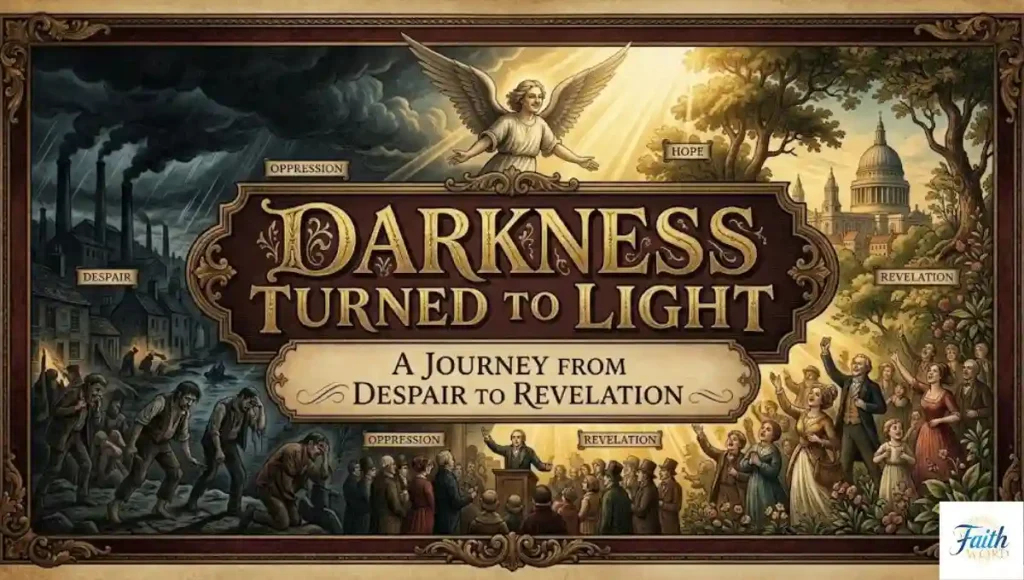
The most powerful spiritual lens through which to understand the biblical meaning of Blake is the theme of darkness and light — one of the most prevalent and theologically loaded contrasts in all of Scripture.
In the Bible, light is often used to represent righteousness, truth, and God Himself. Darkness, on the other hand, represents sin, ignorance, and spiritual blindness.
This contrast does not begin in the New Testament. It begins on the very first page of the Bible:
“In the beginning God created the heavens and the earth. Now the earth was formless and empty, darkness was over the surface of the deep, and the Spirit of God was hovering over the waters. And God said, ‘Let there be light,’ and there was light.”
— Genesis 1:1-3
Before the sun, moon, or stars existed, God spoke light into being. This primordial illumination represents God’s truth breaking into void and chaos. And this pattern. God bringing light into darkness runs like a golden thread through every page of Scripture, all the way to its final chapter.
Darkness and Light in Scripture — A Biblical Overview:
| Scripture | Theme | What It Means for Blake |
| Genesis 1:3 | God creates light | Every Blake’s story begins with God speaking light into darkness |
| Psalm 18:28 | God turns darkness to light | God is the one who transforms what was dark in our lives |
| John 1:5 | Light shines in darkness | The light of Christ in a Blake can never be extinguished |
| John 8:12 | Jesus is the Light of the World | Following Christ means walking in light, not darkness |
| Ephesians 5:8 | Once darkness, now light | The story of every redeemed Blake |
| 1 John 1:5 | God is light; no darkness in Him | The ultimate destination of every child of God |
| Matthew 5:14-16 | You are the light of the world | The calling of every Blake who follows Christ |
Darkness Turned to Light
The name Blake does not shy away from the reality of darkness. And in this, it is profoundly biblical. The Bible never pretends that darkness does not exist. It confronts it, names it, and then declares that God is greater than it.
Several biblical personalities demonstrate this light-darkness contrast that makes the spiritual meaning of Blake so compelling. Paul (formerly Saul) experienced the most dramatic transformation. On the Damascus road, literal light from heaven struck this persecutor blind. His encounter with Christ shifted him from darkness aggressively opposing God’s kingdom into becoming Christianity’s greatest missionary.
This is the story that the name Blake spiritually tells. Not a story of someone who was always in the light, but someone who has been brought from darkness into the light and whose life now reflects that journey.
Biblical Examples of Darkness Turned to Light:
- Saul to Paul — From violent persecutor to passionate apostle. Literal and spiritual light on the Damascus road changed everything. (Acts 9:3-9)
- Peter’s Denial to Peter’s Proclamation — Peter denied Christ three times during darkness — literal nighttime during Jesus’ trial. Yet this same man became the rock of the early church, preaching boldly in the full light of Pentecost.
- The Prodigal Son — He descended into the deepest moral darkness, feeding pigs in a foreign land. But when he came to himself and returned to his father, he was welcomed with light, celebration, and restoration. (Luke 15:11-32)
- Mary Magdalene — From a life described as filled with seven demons, Mary became the first person to witness and proclaim the resurrection of Christ. Darkness to light in the most glorious sense. (Luke 8:2, John 20:16-18)
For every person named Blake, these stories are a personal inheritance. A reminder that God specializes in turning darkness into light, and that your name has been prophetically declaring this truth all along.
The Call to Shine
If one half of the biblical meaning of Blake is the darkness we come from, the other half is the blazing, unmistakable call to shine. This is where the name moves from passive description to active commission.
Jesus did not merely observe that His followers had moved from darkness to light. He gave them a mandate:
“You are the light of the world. A city set on a hill cannot be hidden. Let your light shine before others, that they may see your good deeds and glorify your Father in heaven.”
— Matthew 5:14-16
Just as the name bridges the gap between dark and light, Christians are called to shine in places where hope seems dim.
What the Call to Shine Looks Like for Blake:
- In the home — Being a person of warmth, truth, and grace that creates a safe and spiritually nourishing environment for family.
- In the workplace — Bringing integrity, kindness, and quiet godliness into professional spaces that often operate in moral greyness.
- In friendships — Being the person who speaks truth, offers hope, and refuses to let others stay in darkness when you carry light.
- In the community — Using influence, gifts, and opportunities to push back against injustice, apathy, and spiritual darkness in your city.
- In personal faith — Never treating your faith as a private possession, but letting it spill over into every area of life as a witness to the God who brought you out of darkness.
There are over 200 references associating light with God, truth, and life in Scripture suggesting deep biblical links between names containing elements referring to light (like Blake) and spiritual concepts of enlightenment, revelation, and moral clarity.
Spiritual Lessons from the Name Blake
The biblical meaning of the name Blake is not merely theology to be admired. It is spiritual instruction to be lived. Here are the defining lessons this name teaches every person who carries it:
Lesson 1 — Darkness Is Not the End The presence of darkness in your story does not define your destiny. God is in the business of turning dark seasons into testimonies of His faithfulness. Blake reminds you that your past is not your prison.
Lesson 2 — Transformation Is God’s Specialty Blake symbolizes the profound change that occurs when one embraces faith — the journey from old ways to a new life in Christ, as 2 Corinthians 5:17 declares: “If anyone is in Christ, the new creation has come; the old has gone, the new is here!”
Lesson 3 — You Are Called to Carry Light, Not Just Receive It The spiritual calling embedded in Blake is not passive. It is an active commission to take the light of Christ into every dark corner of the world you inhabit.
Lesson 4 — Strength Grows in Dark Places Just as trees draw strength and nourishment from deep roots, believers are called to root their lives in God’s Word and presence — and the name Blake serves as a reminder to cultivate a strong relationship with God through prayer, Scripture, and obedience.
Lesson 5 — Identity Is Found in Christ, Not in Circumstances The name Blake reminds us that contrasts exist in life — darkness and light, sin and redemption, brokenness and healing. As the name can mean both, so our lives can hold both until Christ brings transformation.
Lesson 6 — Endurance Is a Spiritual Virtue Dark seasons are not a sign of God’s absence. They are often the very places where deep faith is forged. Blake calls its bearers to endure, to remain rooted, and to trust that morning always follows the night.
Blake and the Christian Life

The name Blake fits beautifully into the full arc of the Christian life from conversion to sanctification to glorification. At each stage, the name speaks something true and encouraging:
The Christian Journey Through the Lens of Blake:
| Stage of Christian Life | What Blake Speaks | Key Scripture |
| Conviction | Awareness of darkness and need for God | John 3:19-20 |
| Conversion | Moving from darkness into God’s light | Acts 26:18 |
| Sanctification | Growing in light, dying to darkness | Romans 6:13 |
| Service | Shining as light for others | Matthew 5:16 |
| Perseverance | Enduring through dark seasons in faith | James 1:2-4 |
| Glorification | Eternal life in God’s unending light | Revelation 21:23 |
A person named Blake is reminded of their faith every day. Their name speaks of hope, strength, and divine purpose. In the Christian life, Blake is not just a name. It is a daily reminder to shine for God.
People named Blake are often seen as natural leaders and healers. They carry a light that others can feel. Their presence brings calm, strength, and inspiration wherever they go. These are not merely personality traits they are spiritual callings embedded in the name itself.
Character Traits Associated with the Name Blake:
- Natural leadership ability and quiet authority
- Deep creativity and visionary thinking (following the legacy of William Blake)
- Compassion and an instinctive desire to help those in darkness
- Resilience and the capacity to endure difficulty without losing faith
- An honest, direct, truth-telling presence in relationships and community
- Genuine spiritual sensitivity and hunger for God’s presence
A Broader Reflection on Light and Darkness
The theme at the heart of the name Blake the relationship between darkness and light is not merely a poetic device. It is the central drama of the entire biblical narrative, and it demands a broader reflection.
This interplay between light and darkness is a recurring theme in Scripture, symbolizing the struggle between good and evil, ignorance and knowledge, sin and redemption.
The Bible opens with darkness over the deep (Genesis 1:2) and closes with a city that has no need for sun or moon, because the Lamb is its light (Revelation 21:23). The entire story of Scripture is God’s relentless, unstoppable movement toward the elimination of all darkness from His creation and His people.
The Arc of Light and Darkness Through Scripture:
- Creation — God speaks light into primordial darkness. (Genesis 1:3)
- The Fall — Humanity chooses darkness over light, and spiritual blindness enters the world. (Genesis 3)
- The Law — God gives His Word as a lamp to guide His people through the darkness. (Psalm 119:105)
- The Incarnation — Jesus, the Light of the World, enters into human darkness personally. (John 1:14)
- The Cross — Literal darkness covered the land at the moment when Christ bore the world’s sin. (Matthew 27:45)
- The Resurrection — Light conquers darkness permanently and irreversibly. (John 20:1)
- Pentecost — The Spirit fills believers, making them vessels of light in a dark world. (Acts 2)
- The Church Age — Believers carry the light of the gospel into every corner of the earth. (Matthew 28:19-20)
- The New Creation — All darkness is finally and forever abolished. (Revelation 21:23-25)
For every person named Blake, this arc is their arc. Their name places them inside the greatest story ever told.The story of God bringing light where there was darkness, and life where there was death.
The Spiritual Significance of Names in the Bible
To fully appreciate the biblical meaning of Blake, we must understand how seriously the Bible itself takes the significance of names. In Scripture, a name is never merely a label. It is a declaration of identity, a statement of destiny, and often a direct word from God.
How the Bible Treats the Significance of Names:
- Abram became Abraham — A single letter added by God transformed “exalted father” into “father of many nations,” reflecting the promise God made over his life. (Genesis 17:5)
- Jacob became Israel — After wrestling with God through the night, the man who had lived by manipulation became “one who struggles with God” — a new identity forged in a dark moment. (Genesis 32:28)
- Simon became Peter — Jesus looked at this impulsive fisherman and called him “the rock” — a name that became a prophetic commission over his entire ministry. (Matthew 16:18)
- Saul became Paul — The transformed persecutor took a new name to reflect his new identity in Christ. (Acts 13:9)
They are more than just identifiers; names often reflect heritage, character, or even prophetic hope spoken over someone’s life.
The name Blake, though it does not appear directly in Scripture, carries the same weight of meaning that the Bible attributes to all names. It is a declaration, a calling, and a daily reminder of the spiritual journey that every bearer of this name is walking.
Why Choosing Blake for Your Child Matters:
- It gives them a daily reminder that darkness does not have the final word in their life
- It calls them toward transformation, light, and purposeful living in God
- It connects their personal story to the grandest story in all of human history
- It is a name that grows with them — as meaningful in childhood as in mature faith
- Every time you say your child’s name, you’ll remember the calling to shine as light, the reality of redemption, and the Christian encouragement to walk in God’s truth.
FAQs
What is the biblical meaning of the name Blake?
The biblical meaning of Blake centers on the powerful spiritual contrast of darkness and light, representing transformation, redemption, and the calling to shine as a child of God.
Is the name Blake found in the Bible?
No, the name Blake does not appear directly in Scripture, but its themes of darkness and light in the Bible align perfectly with the most central theological truths of the Christian faith.
What does the name Blake mean spiritually?
Spiritually, Blake means a life transformed from darkness into light. A person called to carry God’s redemptive work and shine as a beacon of hope, truth, and grace in the world.
Is Blake a good Christian baby name?
Yes, Blake is an excellent choice for Christian baby names because its dual meaning of dark and light powerfully captures the gospel story of redemption, transformation, and life shaped by God.
What spiritual lessons does the name Blake teach?
The name Blake teaches that darkness is never the end, that transformation through Christ is always possible, and that every believer is called to shine as light wherever God has placed them.
Conclusion
The biblical meaning of the name Blake reveals one of the most spiritually complete names a Christian can carry. A name that honestly acknowledges the darkness of the human condition while boldly declaring the transforming power of God’s light.
From its Old English roots to its rich biblical symbolism of names, Blake captures the entire gospel story: darkness confronted, light proclaimed, and lives transformed through Christ for eternal purpose.
For any parent engaged in intentional naming for faith, or any believer seeking deeper meaning in the name they carry, Blake stands as a daily declaration that God’s light shines in the darkness and the darkness has never, and will never, overcome it.

Welcome to Thefaithword! I’m Abdul Mannan Haider. Christian Faith Writer | 10+ Years Bible Study Experience | Founder of (thefaithword.com)
Sharing prayers, blessings, and biblical wisdom to strengthen your faith.